Surfaces, compared
Every restroom floor gets mopped every day. The question is what the mop water and the cleaners do to it.
- Porcelain tile
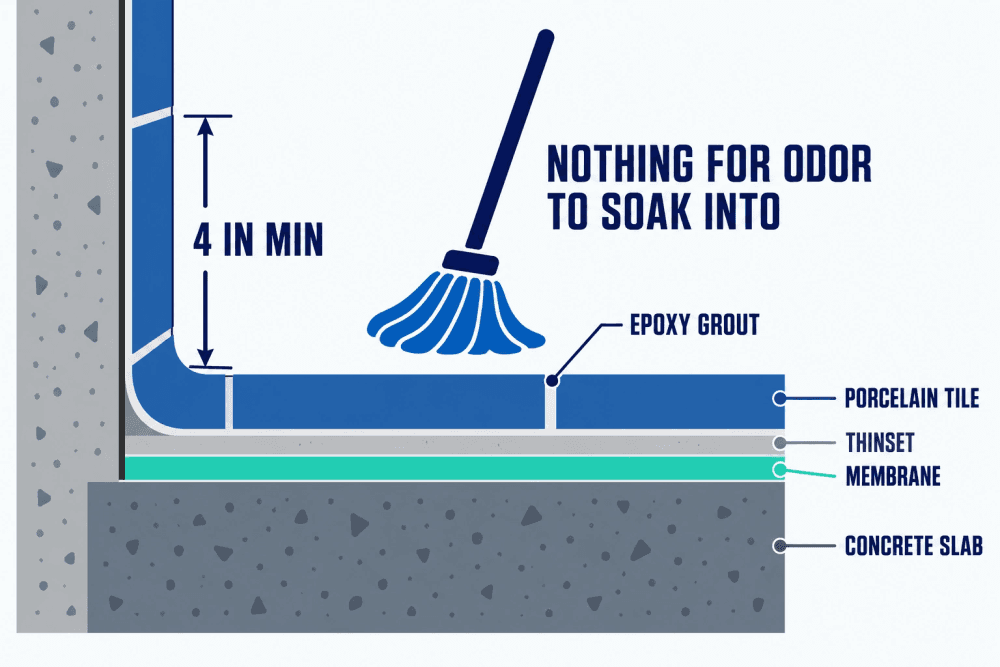
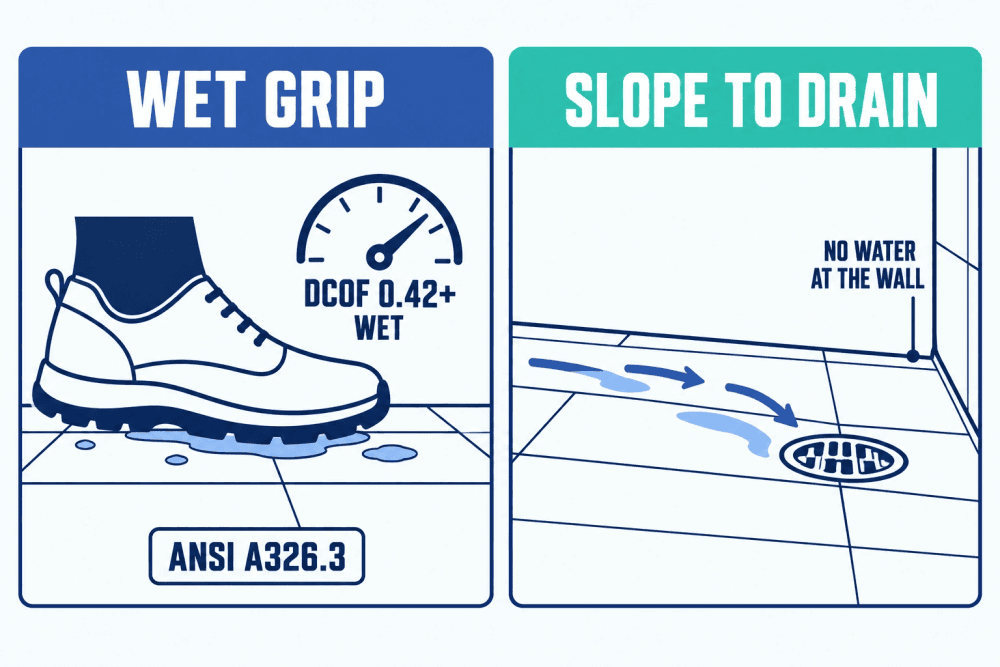
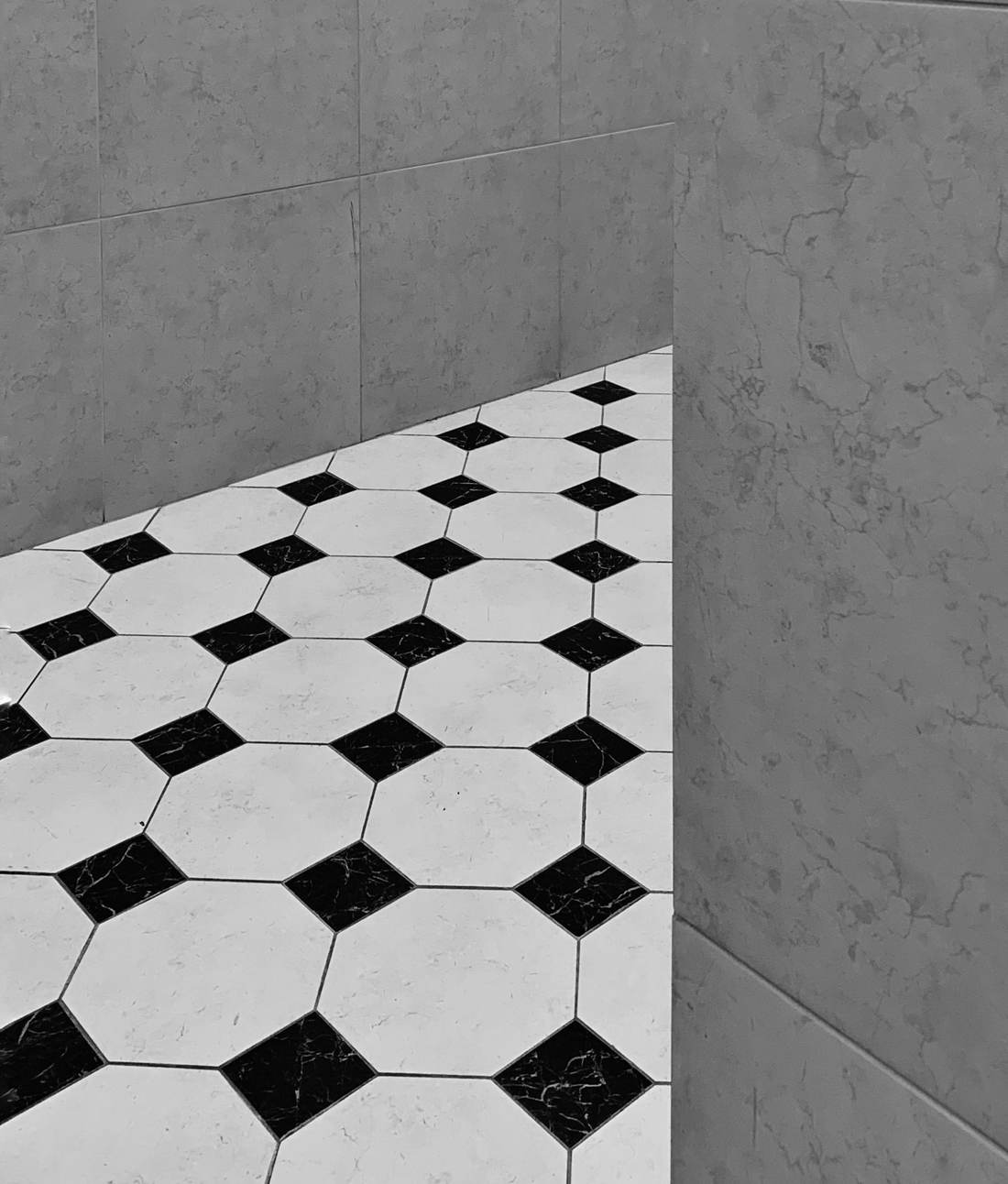
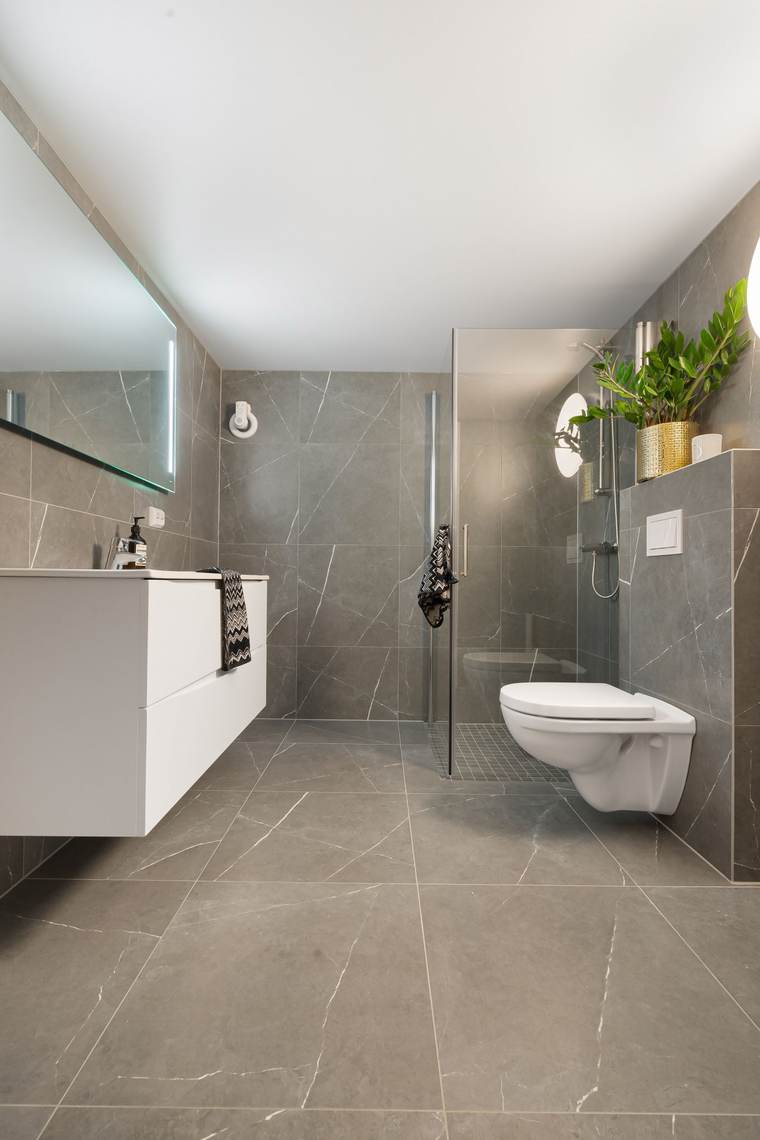
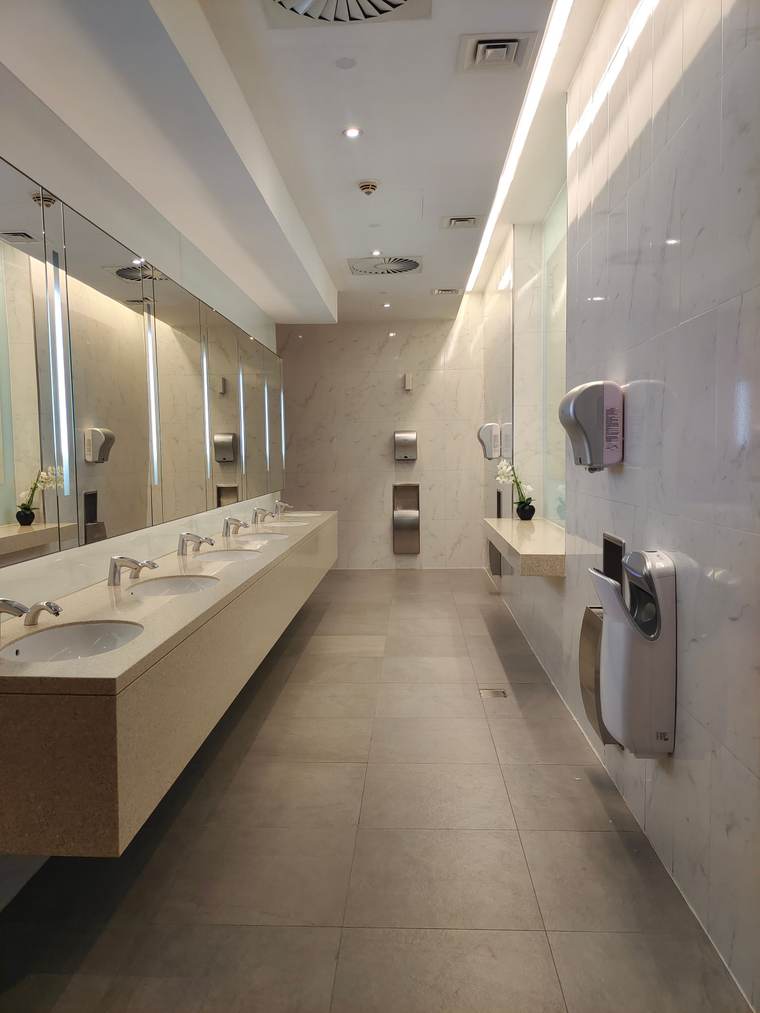
- Dense, hard and available with a wet slip-resistance rating, which makes it a common long-lasting restroom floor.
- Resinous (epoxy) flooring
- A poured, seamless floor that can run up the wall as a cove base, with grit added for grip. It needs time to cure before the room is used.
- Sealed concrete
- Few seams and low cost, but slick when wet unless treated, and the sealer has to be renewed. Best kept to back-of-house rooms.
- Sheet vinyl and vinyl plank
- Quick to install, but water works into seams and edges, which is where restroom vinyl fails. Suited to dry, lightly used rooms.
| Surface | Seams | Wet grip | Cleaning chemicals | Best for |
|---|---|---|---|---|
| Porcelain tile | Grout joints | Rated by the tile maker | Holds up well | Most public restrooms |
| Resinous (epoxy) | Seamless, coves up the wall | Grit can be added | Holds up well | Wet, high-traffic rooms |
| Sealed concrete | Few | Slick unless treated | Sealer wears off | Back-of-house rooms |
| Sheet vinyl, vinyl plank | Seams and edges | Varies | Water gets in at seams | Dry, lightly used rooms |