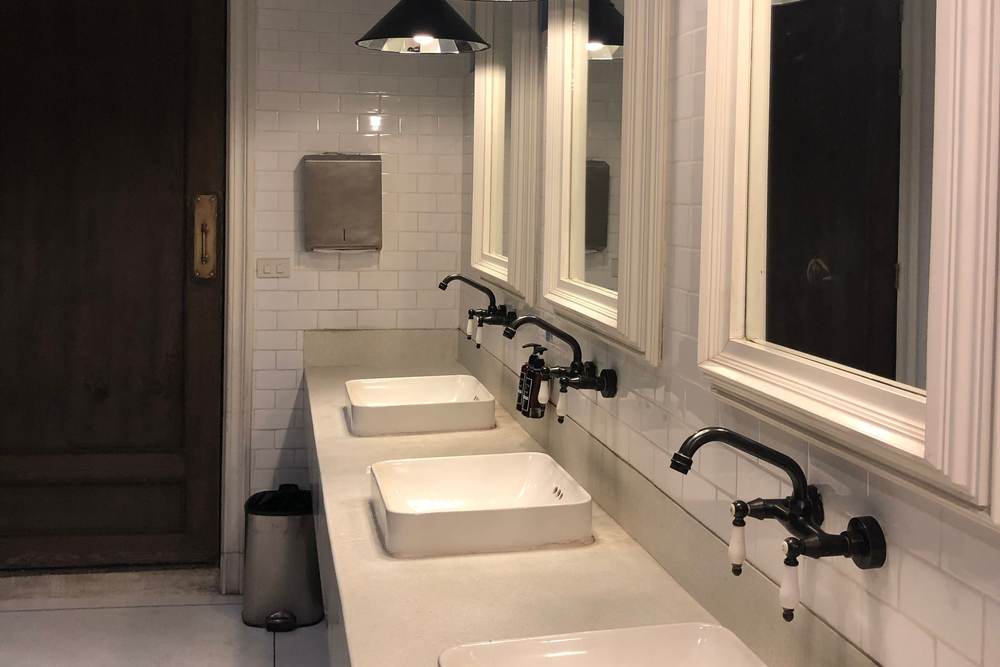
Materials, compared
The right top is the one that shrugs off how your restroom is cleaned and used.
- Solid surface
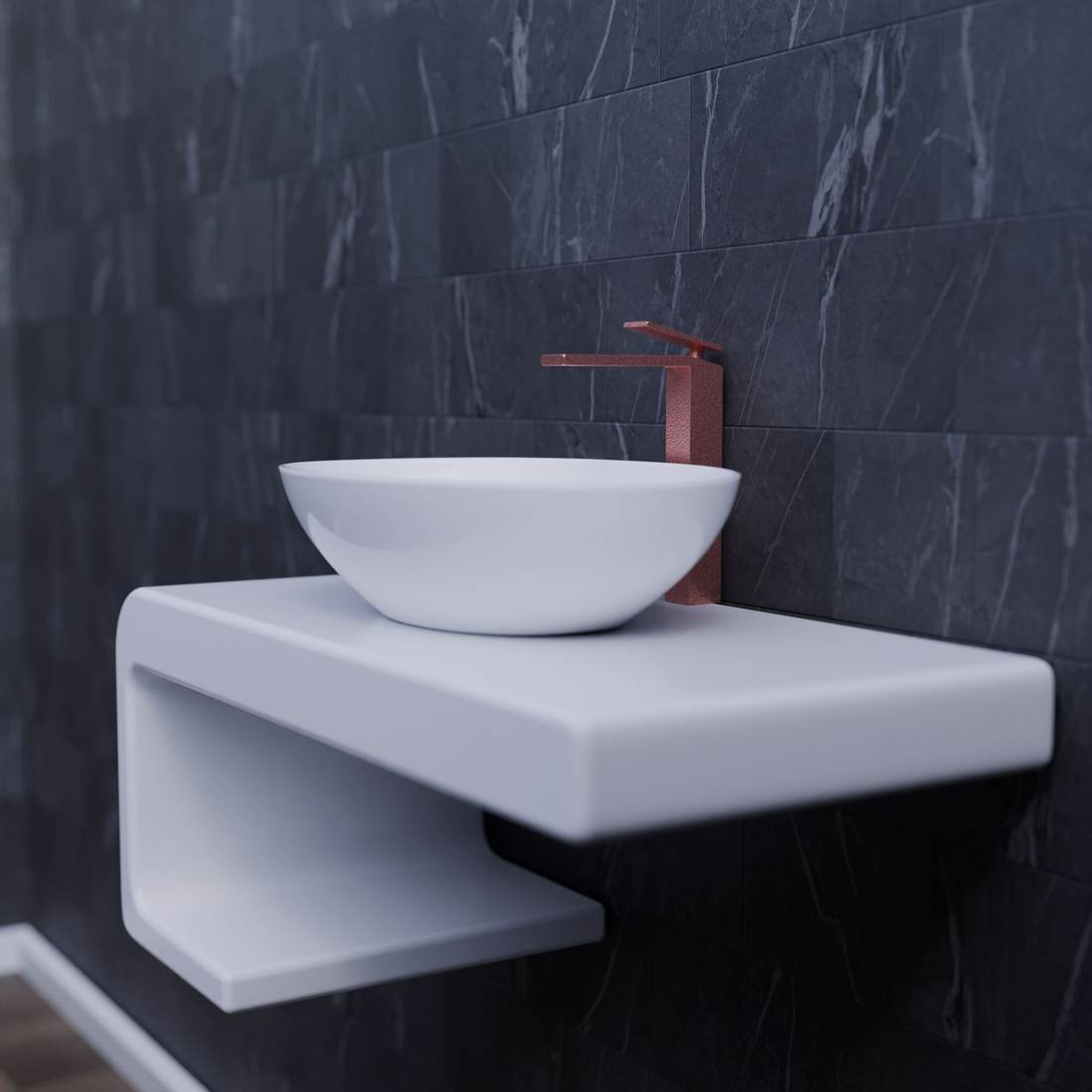
- A non-porous acrylic surface that can be joined without visible seams and formed with the bowls built in. Scratches can be sanded out; it is softer than stone and can scorch.
- Quartz
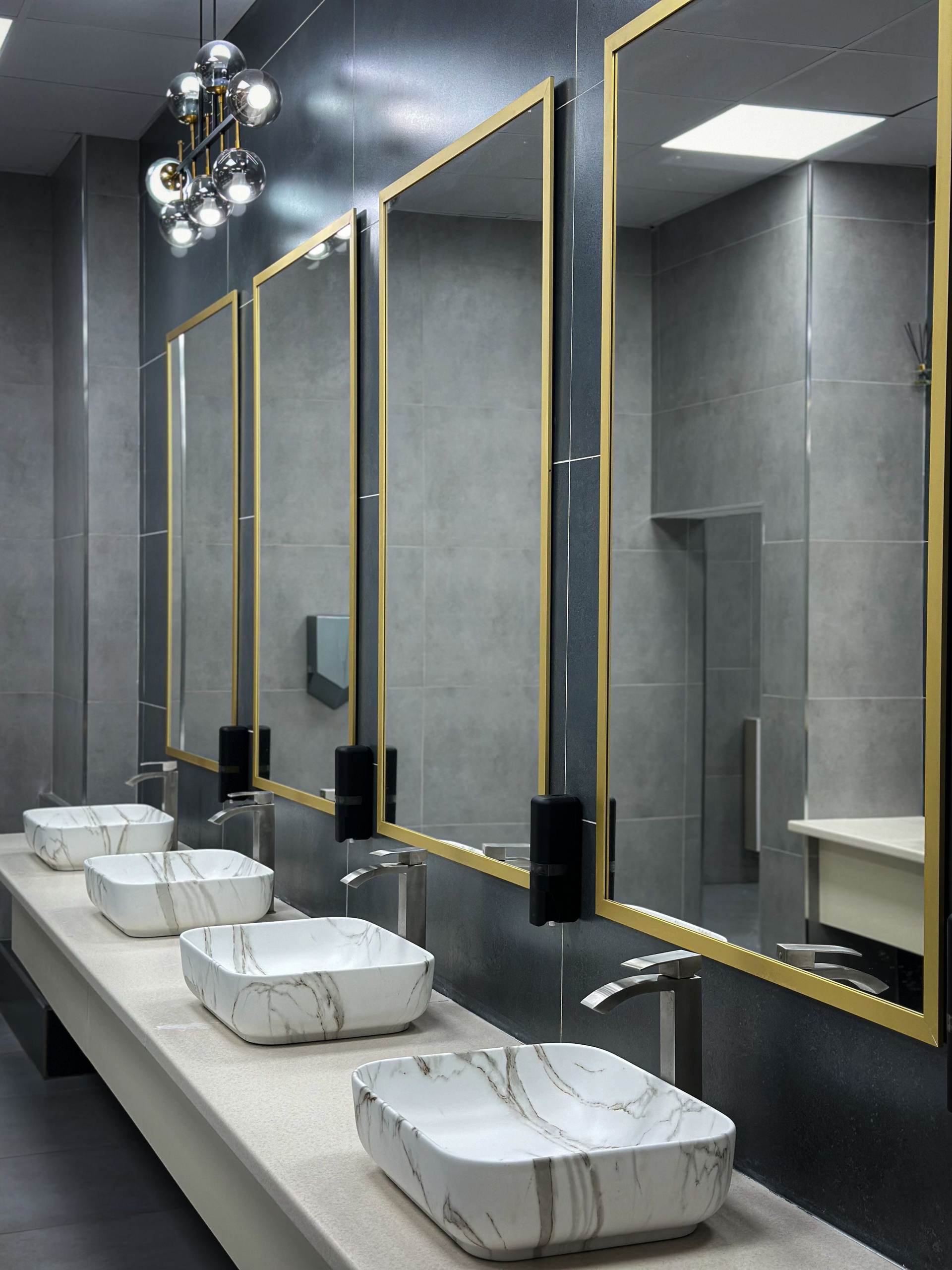
- Engineered stone: very hard, scratch resistant and non-porous. Heavy and more expensive, and joints show where pieces meet.
- Granite
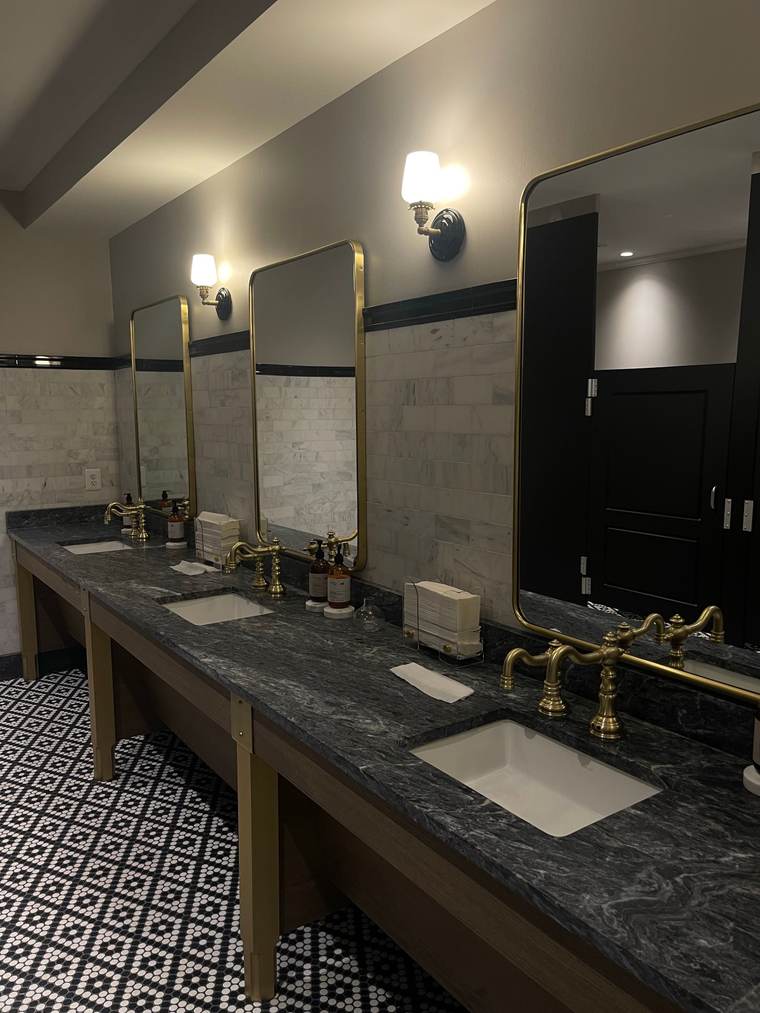
- Natural stone, hard but porous: it needs sealing to resist stains, and small fissures can hold grime. Heavy, with edges that can chip.
- Plastic laminate
- The lowest cost. Fine in a dry, lightly used restroom, but the core swells once water gets into a seam or an edge, which is how most laminate tops fail.
| Material | Water and stains | Repairs | Weight | Best for |
|---|---|---|---|---|
| Solid surface | Non-porous, seamless | Scratches sand out | Light | Busy restrooms, built-in bowls |
| Quartz | Non-porous | Hard to repair | Heavy | Upscale restrooms |
| Granite | Porous, needs sealing | Chips can be filled | Heavy | Where natural stone is wanted |
| Plastic laminate | Swells if water gets in | Replace the top | Light | Dry, lightly used rooms |